CJC-1295 DAC vs No-DAC: why does one last longer?
The makers added DAC so CJC-1295 could hitch onto the blood protein albumin. Without that bond, the unlinked version clears far sooner.
What does DAC do in CJC-1295?
The makers wanted CJC-1295 to outlast the body's own message, so they added DAC to join the drug with a blood protein [2]. Researchers tested this long form in healthy adults and found about half remained after 5.8 to 8.1 days [1].
Once joined, CJC-1295 travels with the larger blood protein [2]. Together they weigh about 66 kilodaltons, a lab unit for protein weight. That lab number offers no safety answer for you. The main human studies used this form. One dose changed growth hormone and IGF-1 for more than one week, showing a blood change rather than a health gain.
Does CJC-1295 "with DAC" mean the long form?
Yes. "With DAC" and "DAC" name the version with an albumin bond [2]. That bond keeps this version in blood for days, while the unlinked form clears much earlier.
Why does the form without DAC wear off sooner?
The short CJC-1295 form has four changed protein pieces, which keep blood from cutting it apart at once. It lacks the albumin bond, so blood clears it over minutes or hours instead of days [11]. Those four changes slow the loss, but they cannot anchor the drug to a long-lived blood protein.
Online posts often use the same CJC-1295 name for both forms, making two drugs with very different timing sound alike. Both are made from the same short protein and carry four changes, but only the longer form has DAC.
Are CJC-1295 no-DAC and the short form the same thing?
Yes. Both names mean the version without the albumin bond [11]. It outlasts the body's brief natural message but lasts far less time than CJC-1295 DAC [9][11]. The four changes protect both forms from being cut apart as fast [9]. Only the DAC version has the albumin bond.
When a source says only "CJC-1295," you may not know which form your source means. The main human studies tested the form with DAC [1], not the short form in the same way. Look for "with DAC" before you rely on a timing claim for your choice.
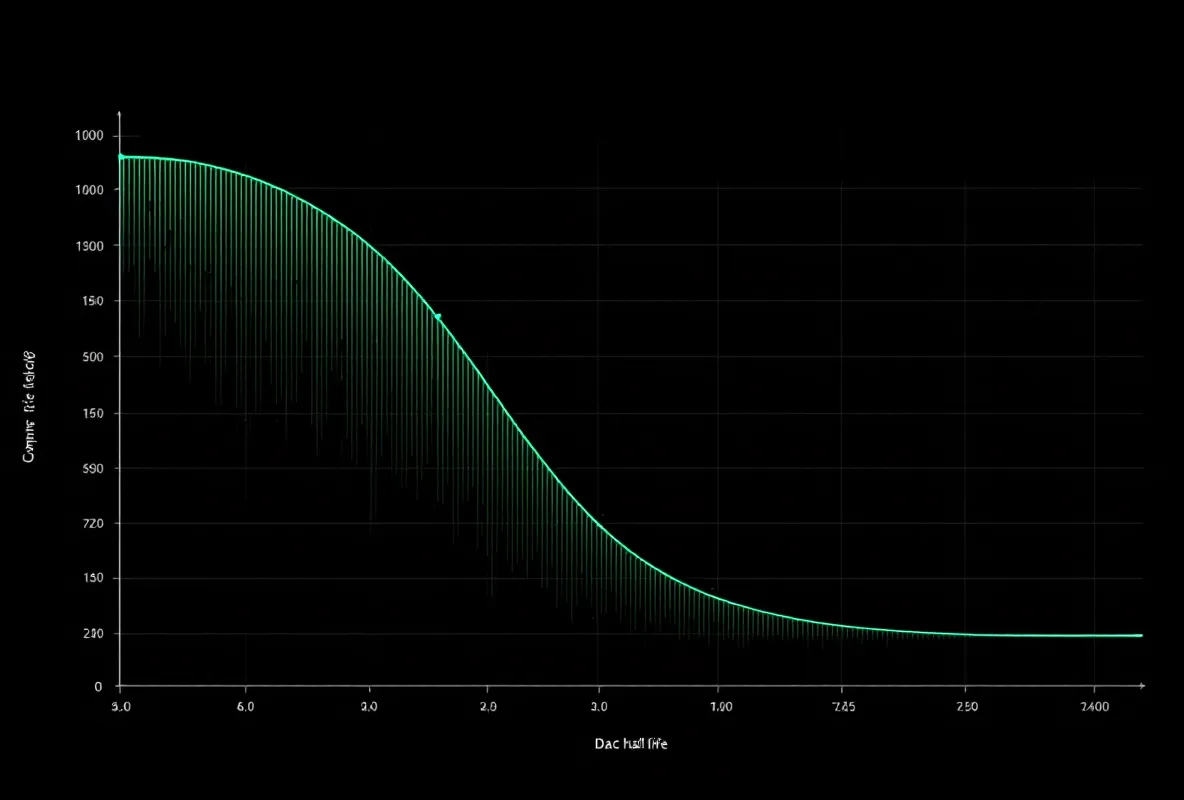
How long does each form remain in blood?
Time in the blood is the clearest difference. In healthy adults, 5.8 to 8.1 days passed before half of CJC-1295 DAC was gone. With repeated doses, IGF-1 remained above its start for up to 28 days [1]. The form without DAC remains for only minutes or hours [11]. One form may still act days later, while the other leaves much sooner.
The albumin bond causes that gap. In rats, CJC-1295 joined to albumin caused a four-fold larger growth-hormone rise. Put plainly, the rise was four times the one from the unlinked form. Researchers could still measure the DAC form in rat blood at 72 hours [2]. For you, the rat work explains time, not a health result.
Blood tests in healthy adults also showed the long timing. After one CJC-1295 DAC dose, average growth hormone rose 2- to 10-fold. The later readings ran between twice and ten times the first reading through six days, perhaps longer. IGF-1 rose 1.5- to 3-fold, reaching between one-and-one-half and three times its opening value. The increase began earlier and was still present from the ninth through the eleventh day [1]. Growth hormone kept its normal daily swing [3]. Blood clears the short CJC-1295 form faster.
What does this mean for you? A longer stay does not make a drug better or safer, and a harmful effect may also last. When you read a timing claim, check which form was used. The research amounts came from the long form. You can compare CJC-1295 with sermorelin without mistaking time in blood for a health gain.